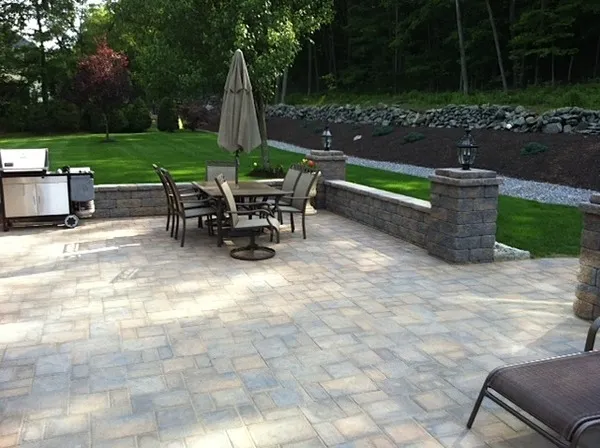
A San Jose patio is in use for most of the year, so layout and finish deserve thought. We set the fall away from the house and build for clay that moves between summer and winter. Tell us how you use the yard and where the sun lands.
A patio in San Jose gets used most of the year, because the dry season runs from late spring into autumn. That makes the layout worth some thought: where the afternoon sun lands, where a table and a grill will sit, and how you walk from the kitchen door. We measure the yard with you and mark the outline on the ground before pricing, so the size on the quote is the size you want.
The slab itself has two jobs here. It must slope away from the house so winter rain does not run to the foundation, and it must cope with clay that lifts and drops a little each year. We compact a rock base, place reinforcement, and put an isolation joint where the patio meets the house so the two can move separately. Sprinkler lines and drains under the area are rerouted or sleeved before the pour, not discovered afterward.
Finish choices include a light broom finish, a sand or salt finish, exposed aggregate, and stamped or coloured concrete. Dark colours get hot in full valley sun, so we point that out when you choose. Most patios are formed one day and poured the next. You can walk on the slab after a day or two, and furniture can go back after about a week.
Patios in San Jose: common questions
Do I need a permit for a patio in San Jose?
A plain patio slab on the ground in your back yard normally does not need a building permit, but a patio cover, a raised slab, a wall or new gas and electrical lines can. We check the rule for your address with the City of San Jose Permit Center before starting.
Will a patio crack on clay soil?
All concrete cracks a little. The aim is to control where. A compacted base, steel and well-spaced control joints keep cracks thin and in straight lines. Keeping sprinklers from soaking one side of the slab also helps a great deal on San Jose clay.
Which patio finish stays coolest in summer?
Light colours and textured finishes stay cooler underfoot than dark, smooth, sealed ones. A plain light grey broom or sand finish is the coolest common choice. If you want colour, a pale tone makes a real difference in July and August.
How it works
- Free estimate: Call, text or book online. We visit and measure.
- Written quote: Clear pricing with finish options.
- Prep & forms: We excavate, grade, compact the base and set forms and reinforcement.
- Pour, finish & cure: We pour, finish, cut control joints and tell you when you can use it.