Short answers to the questions that do not fit elsewhere. For prices see our cost guide, and for rules see our permit guide.
How long does a concrete driveway last?
A concrete driveway built on a good base commonly lasts 30 years or more, and San Jose's lack of frost and road salt helps. What shortens that life here is clay movement, tree roots and water at the edges. Many original 1960s driveways in the city are still in place, cracked but serviceable.
Can I pour concrete myself or should I hire someone?
Yes for small jobs. "Can I do it myself?" has a fair answer for a small pad or a short path: bagged mix, a helper and a free weekend are enough. Anything delivered by truck is a different job: it arrives all at once and sets on its own clock, faster in dry heat. Driveways, large patios and anything structural are worth hiring out.
Can I pour a small shed pad with bags from the store?
Yes. A shed pad of modest size is a fair weekend project. Dig out the topsoil, compact a few inches of crushed rock, form it square and level, add mesh, and mix every bag to the same consistency. Check with the city whether the shed itself needs a permit.
I poured my own walkway and it cracked and sank. Should I redo it or hire someone?
Find out why before you redo it. If it sank, the base was not compacted or the topsoil was left in. If it cracked at random, it lacked joints or dried too fast. If you are confident you can correct that, try again. If the walk is long or near a tree, hiring it out costs less than a third attempt.
How do I get oil stains out of concrete?
Soak up fresh oil with cat litter, then scrub with a degreaser and hot water. Old oil stains need a poultice or an enzyme cleaner left on for a day or more. Do not hose oily residue to the street, because storm drains here flow untreated to creeks and the bay.
Can an old concrete floor be stained or dyed?
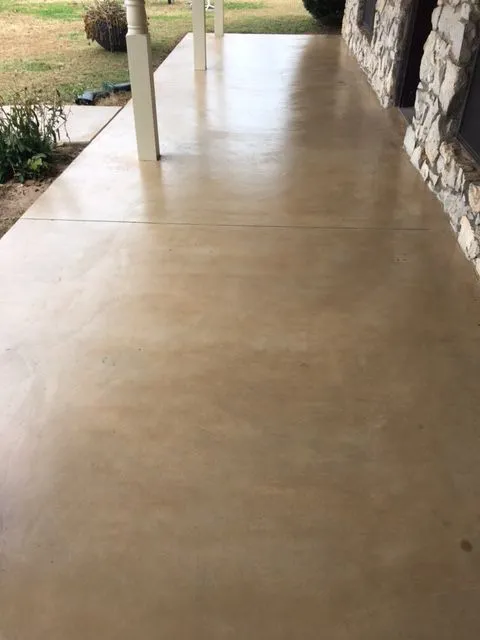
Yes, an old floor can be stained if it is clean and sound. Glue, paint and sealer have to come off first. Stain is translucent, so patches and cracks stay visible. A test area on your own slab is the only reliable preview.
A customer tripped outside my business. Am I liable?
You may be liable, and it depends on the facts. San Jose puts sidewalk maintenance on the adjacent property owner, and leases often pass that duty to the tenant. Tell your insurer and a lawyer at once. Then fix the hazard and keep dated photos. This is general information, not legal advice.
Can sections be replaced while my business stays open?
Yes. We replace concrete in sections so your business stays open, keeping one entrance and a marked path clear at all times. Each new section is closed to foot traffic for a day or two and to vehicles for about a week.
Can you pour a basketball pad or sport court?
Yes. A basketball pad needs an even surface with a slight fall for drainage, a medium broom finish for grip, and joints kept out of the main playing area where possible. There is no published price for sport courts, so we quote after a visit. Check HOA rules on hoops and court lighting.
Do earthquakes damage driveways and patios?
Rarely by themselves. Flatwork on the ground rides along with it. Shaking can widen cracks that were already there and can shift slabs on slopes or poorly compacted fill. Structures such as walls, footings and building slabs are where seismic design matters.
Does bay air or salt harm concrete in San Jose?
Very little. San Jose sits at the south end of the bay, away from open ocean spray. Ground near the bay in Alviso can carry salts and a high water table, which makes good cover over the steel and a dense mix more important there.
Does concrete make my yard hotter, and can I reduce runoff?
Paving stores heat and sheds water. Light-colored concrete, shade trees and smaller paved areas keep a yard cooler. Separate pads with gravel or planting between them, or a slab that drains to a planted area, let more winter rain soak in.
To get a real price for your address, book a free on-site estimate. Call (408) 889-7434 or text us a photo and rough measurements.