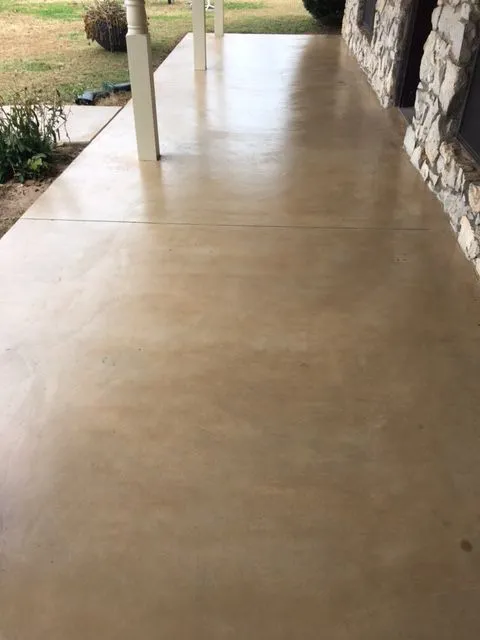
New concrete can usually be walked on in a day or two and driven on after about a week. San Jose's weather is kind to concrete most of the year. Heat and dry wind in summer are the main things to plan around.
How long does concrete take to cure?
Concrete takes about 28 days to cure to its design strength. It gains most of that in the first week. Curing is a chemical reaction that needs moisture, so in our dry air the slab is kept damp or coated with a curing compound for the first days.
How long before I can drive on new concrete?
Wait about 7 days to drive on new concrete with a car. Wait closer to a month for RVs, moving trucks and loaded work trucks. Keep wheels away from the edges early on, since they are the weakest part.
How long before I can walk on new concrete?
You can walk on new concrete after 24 to 48 hours in normal weather. Keep dogs, bikes and furniture legs off for a few days more, because the surface marks easily at first.
How long does it take to pour a driveway?
It takes one day to pour a driveway, after one or two days of tear-out, grading and forming. Permits for approach or sidewalk work, a city inspection or a wet week add time before the pour. The whole job is usually under a week on site.
Can concrete be poured in the rain?
Concrete should not be poured in the rain. Light drizzle can be managed with covers, but steady rain washes the surface. The valley's rain is concentrated between November and March and dry spells between storms are common, so winter pours are scheduled around the forecast.
Is it too hot to pour concrete in a San Jose summer?
It is rarely too hot to pour here if the work is planned for it. On days in the 90s and above, crews start at first light, wet the base, may use a retarder in the mix, and begin curing as soon as the finish allows. During a heat wave, moving the pour a few days is the better choice.
Can concrete be poured in cold or freezing weather?
Yes, with care, but freezing weather is not a real issue in San Jose. Hard frosts are few and brief, mostly on winter nights in low spots. Cool temperatures slow the set and add a day or two before use. Protection is needed only when a frosty night follows a pour.
What is the best time of year to pour concrete?
The best time of year here is spring and autumn, when days are mild and dry. Summer works with early starts. Winter works between storms. There is no closed season in this valley, which is one reason schedules fill early in spring.
Can I use salt or deicer on new concrete?
You will almost never need deicer in San Jose. If you do get ice, use sand for grip on new concrete and avoid salt in the first year, since deicing chemicals can damage a young surface. Water softener salt and fertilizer spilled on a slab are a more likely local source of salt damage.
How do I look after new concrete in the first week?
Keep it damp if we ask you to, keep sprinklers with hard water from spotting colored work, keep cars off, and do not drag anything across it. Leave any curing compound alone. It wears away by itself.
To get a real price for your address, book a free on-site estimate. Call (408) 889-7434 or text us a photo and rough measurements.